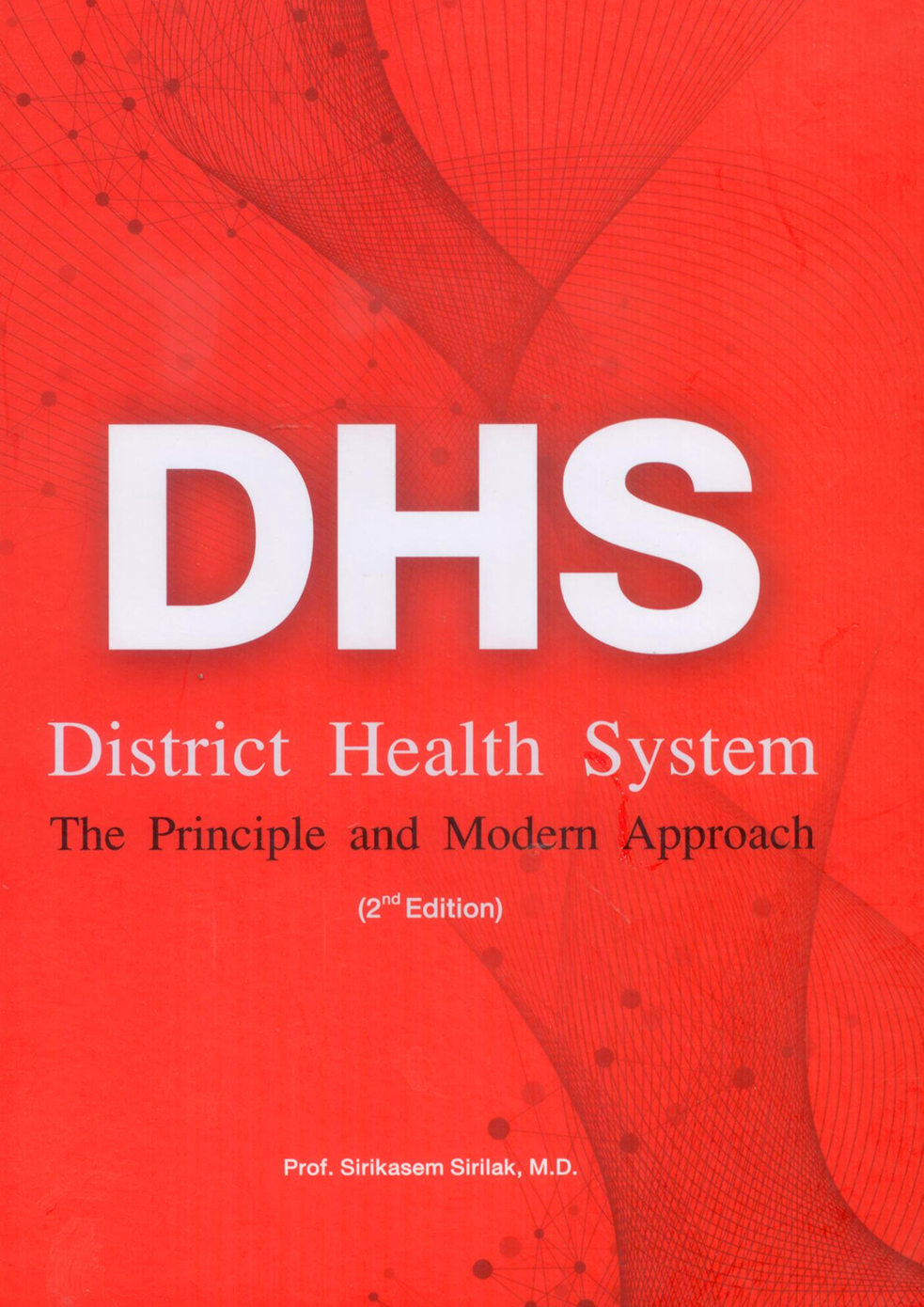


Introducing the new book
Author : Sirikasem
Sirilak
Title : District Health System : The Priciple and
Modern Approach = ระบบสุขภาพอำเภอ : หลักการและแนวทางใหม่
Publisher : Phitsanulok : Rattanasuwanprinting 3,
2021
Call number : 362.12 S464D 2/2021
The COVID-19 pandemic has presented a significant
threat to humanity. People all over the world are faced with unprecedented
challenges, as well as serious health risks. However, issue-based solutions
without integration are insufficient to address this global phenomenon.
Therefore, finding systemic solutions would result in the delivery of high-quality
and cost-effective health services to communities. Even after this crisis is over, we hope that
in the long run, it will result in the well-being, stability, and
sustainability of the people.
Health, as defined by the World Health
Organization (WHO), is "a state of complete physical, mental, social and
spiritual well-being and not merely the absence of disease or infirmity."
Hence, the health care dimension must be broad and comprehensive
One of the systems that responds to the integration
of systemic solutions and meets the WHO definition of health is the
"District Health System" under the WHOs Six Building Blocks for
District Health Development. This is a systemic thinking principle that has
been proven in a variety of settings around the world. In Thailands context,
this concept was modified to align with the Six Building Plus One principle and
subsequently incorporated into the Community Health System. This system can be
used as an essential tool and a key factor in ensuring that effective
health-care work is carried out in the area.
Since 2012, the Ministry of Public Health of
Thailand has implemented a major policy directive to establish public health
care system known as the District Health System (DHS). The main goal of this
guideline is to improve the quality of life of Thai people by establishing a
strong district level management mechanism, integrating resources for the
public welfare through the cooperation of all sectors at the district level
affected by various problems and contexts in each area, raising awareness of
the importance of health and well-being among people and communities,
encouraging participation in the health system, and finally, promoting
self-reliance in communities to ensure long-term health care sustainability.
This book - District Health System: The Principle
and Modern Approach (2" Edition) - was written to serve as a knowledge
base and guide for medical students, doctors, multidisciplinary professionals
working in the countrys healthcare system, as well as people in the private
sector or community organization networks and the general public. It is a health
educational tool designed for work development and real-world applications.
ปรากฏการณ์การแพร่ระบาดของโรคโควิด-19
(COVID-19) จัดเป็นความท้าทายอย่างยิ่งต่อมวลมนุษยชาติ เพราะเมื่อมนุษย์ในทุกมุมโลกต้องเผชิญกับภัยสุขภาวะที่รุนแรงและรวดเร็วแบบฉับพลันเช่นนี้
การแก้ไขปัญหาแบบเชิงประเด็น (Issue-based) ที่ไม่มีการบูรณาการย่อมไม่ใช่วิธีที่ดีพอ
การหาคำตอบที่ครอบคลุมรอบด้านเพื่อนำสู่การแก้ปัญหาเชิงระบบ (System
Development) จึงจะทำให้เกิดการส่งมอบบริการสุขภาพ (Service
Delivery) ที่ดีและมีประสิทธิภาพกับมวลประชากรได้
ทั้งที่เป็นไปเพื่อให้ผ่านพันวิกฤตการณ์ ทั้งยังหวังว่าในระยะยาวจะส่งผลให้เกิดสุขภาวะ
ที่มีความมั่นคง ยั่งยืน อีกด้วย
สุขภาพตามความหมายขององค์การอนามัยโลก
(WHO)
คือ การที่บุคคลมีสุขภาวะที่สมบูรณ์ทั้งทางด้านร่างกาย จิตใจ
สังคมและจิตวิญญาณ ไม่ใช่แต่เพียงการปราศจาก โรคภัยไข้เจ็บ
หรือความพิการหรือร่างกายไม่แข็งแรงเท่านั้น ซึ่งตรงกับภาษาอังกฤษที่ว่า "Health
is a state of complete physical, mental, social and spiritual well-being and
not merely the absence of disease or infirmity" ดังนั้นมิติการดูแลสุขภาพจึงต้องกว้างขวางครอบคลุม
หนึ่งในระบบที่ตอบสนองต่อการบูรณาการเพื่อแก้ปัญหาเชิงระบบและเป็นไปตามนิยามเรื่องสุขภาพตามความหมายขององค์การอนามัยโลก
คือ "ระบบสุขภาพอำเภอ" ภายใต้วิธีการดำเนินการด้วย 6 เสาหลัก (Six
Building Blocks for District Health Development) ขององค์การอนามัยโลก
ซึ่งเป็นหลักการคิดเชิงระบบ (Systemic Thinking) ที่ผ่านการพิสูจน์ในหลายพื้นที่ทั่วโลก
ประกอบกับเมื่อต้องนำมาใช้ในบริบทของประเทศไทย
จึงได้มีการปรับเปลี่ยนให้สอดคล้องเป็น Six Building Blocks Plus One ซึ่งได้ผนวกระบบสุขภาพชุมชน (Community Health System) เข้าไว้เพิ่มเติมด้วย ระบบนี้สามารถใช้เป็นเครื่องมือสำคัญและเป็นปัจจัยหลักในการขับเคลื่อนสู่การทำงานที่มีประสิทธิภาพด้านการดูแลสุขภาพในพื้นที่
นับตั้งแต่ปี พ.ศ. 2555
กระทรวงสาธารณสุขได้มีแนวนโยบายที่สำคัญ คือ การสร้างระบบเพื่อดูแลสุขภาพประชาชน
ที่เรียกว่า ระบบสุขภาพอำเภอ (District Health System : DHS) โดยมีเป้าหมายหลักเพื่อสุขภาวะของคนไทย
ผ่านระบบกลไกการบริหารงานระดับอำเภอที่เข้มแข็ง
มีการนำทรัพยากรที่มีอยู่มาใช้ประโยชน์ร่วมกันและด้วยความร่วมมือกันของทุกภาคส่วนในระดับอำเภอ ภายใต้ปัญหาและบริบทที่แตกต่างกันในแต่ละพื้นที่ โดยประชาชนและชุมชนมีความตระหนักถึงความสำคัญของสุขภาพและคุณภาพชีวิต
และมีส่วนร่วมในระบบสุขภาพ ในที่สุดประชาชนสามารถดูแลตนเองและพึ่งตนเองได้
หนังสือ ระบบสุขภาพอำเภอ :
หลักการและแนวทางใหม่ = District Health System : Principle and
Modern Approach (ฉบับปรับปรุง) เล่มนี้ เขียนขึ้นเพื่อใช้ประกอบเป็นความรู้ความเข้าใจและใช้เป็นแนวทางให้แก่นิสิต
นักศึกษาแพทย์ แพทย์และเพื่อนร่วมสหสาขาวิชาชีพที่ทำงานในระบบสุขภาพของประเทศ
ตลอดจนถึงบุคลากรในภาคเอกชนหรือเครือข่ายองค์กรในชุมชน
และยังหมายรวมถึงประชาชนทั่วไปเองด้วย ให้สามารถนำไปประยุกต์ใช้เป็นเครื่องมือเพื่อการพัฒนาการดูแลสุขภาพในชีวิตจริง